Agriculture Policy Reform & Institutional Strengthening
Building the foundations for competitive and enduring agricultural institutions
Effective policies and strong institutions are essential for overcoming market constraints in the agriculture sector. However, many government ministries, departments, and agencies face challenges such as inefficient policies and legal frameworks, outdated digital systems, insufficient funding, and a lack of qualified staff. This is an obstacle to implement, among others, effective extension services, food security early warning and nutrition monitoring systems, and an appropriate business environment favouring private capital investment and public-private partnerships. These constraints hinder the development and implementation of robust agricultural policies and services. Furthermore, when private sector and civil society actors lack capacity and coordination, they are less able to complement public sector efforts or hold institutions accountable.
NIRAS supports governments and institutions at all levels to build an inclusive, sustainable, and competitive agricultural sector that protects the environment, boosts rural incomes, and reduces migration.
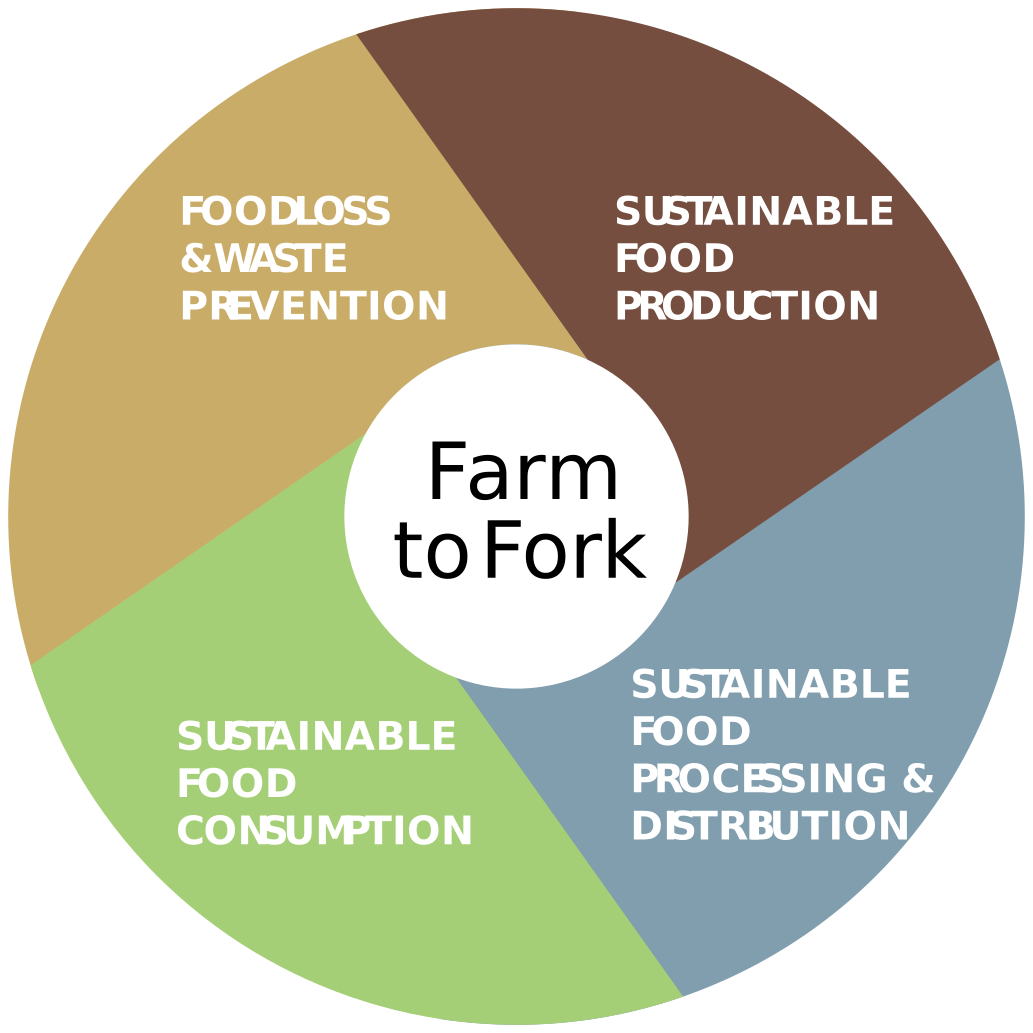
EU's Farm to fork strategy is an important pillar in all EU's partnerships in the agriculture sector.
Our specialist services:
- Supporting the drafting of policies, regulatory, and legal frameworks,
- Assisting governments and institutions in design and management of agricultural services,
- Providing capacity development to regulatory agencies and service providers,
- Guiding EU accession and partner countries through alignment with EU legislation and requirements,
- Facilitating establishment and operation of farmers' cooperatives and private sector associations,
- Supporting gender-, climate- and youth-inclusive governance processes.
Highlighted projects
Developing a resilient, inclusive, environmentally sustainable and competitive agricultural sector in anticipation of Ukraine's future membership in the EU
The Institutional Policy Reform for Smallholder Agriculture (IPRSA) project, spanning phases I, II, and III, is designed to foster a more inclusive, sustainable, and competitive agricultural sector in Ukraine. This initiative aims to protect the environment, raise rural incomes, and reduce migration from rural areas, especially during the current challenging wartime context. The project has played an essential role in ensuring agriculture remains a key contributor to Ukraine’s food security and export revenues.
Thanks to IPRSA support, Ukraine has developed long-term strategies for agriculture, fisheries, forestry, and irrigation, which is also important in the context of Ukraine's efforts to achieve EU membership. Internal controls and risk management have also been improved within the Ministry of Agrarian Policy and Food (MAPF) and related agencies. In preparation for EU accession, IPRSA has helped to harmonise Ukrainian agricultural laws with EU standards, aided bilateral screening preparations, and backed MAPF with ongoing legal and technical drafting. During the first two phases of the project, 11 laws and 28 by-laws were adopted. Critical systems like the State Agrarian Registry and the Agro-Diia digital platform were launched to improve transparency and farmer participation. Over €70 million in grants supported more than 34,000 small-scale farmers, especially in liberated territories, and IPRSA also assisted the UN's Food and Agriculture Organisation (FAO) in delivering 254 investment grants in western Ukraine.
To boost advisory services and research, the Agricultural Knowledge and Innovation System (AKIS) was established, reaching over 2,000 people through training and building connections with EU AKIS networks. IPRSA created maps, zoning studies, and registration tools to help with viticulture, certification of geographically indicated products, and tourism and branding projects. Further efforts included piloting the EU Farm Accountancy Data Network, supporting value chain development in key sectors and forming smallholder innovation groups in rural communities.
During phase II, IPRSA continued to provide technical support for drafting the initial EU accession questionnaires and preparing bilateral screening presentations for Chapters 11 and 13, including organising mock screening sessions. Phase III will further reinforce Ukraine’s agriculture sector, preparing it for future integration into the EU.