
Hydrogen & PtX
For many years, the energy sector’s evolution was driven by the rise of RE technologies and their gradual acceptance as viable alternatives to conventional power generation. With this foundation now firmly established, the sector is entering a new phase—one that focuses on decarbonisation through advanced energy vectors such as green hydrogen (Green H₂) and Power-to-X (PtX) technologies. A persistent challenge in RE remains the intermittency of supply and the lack of cost-effective storage solutions. One promising approach is converting surplus renewable electricity into hydrogen via electrolysis. While the technology itself is established, integrating it with RE sources creates a clean, circular energy cycle. The resulting hydrogen has diverse applications – it can be converted to ammonia for fertilizer, power fuel cells for mobility, or potentially fuel sustainable aviation, reducing CO2 emissions across multiple sectors. These applications represent a convergence of traditional industrial processes with next-generation fuels, opening up new avenues for innovation and investment.
NIRAS is actively supporting this transition. We conduct technical and economic assessments for hydrogen production facilities, contribute to national and regional hydrogen strategies, and support the development of RE infrastructure that feeds hydrogen systems. Our work spans both public and private sectors, often acting as a bridge between technical expertise and stakeholder engagement.
Internationally, the Hydrogen Breakthrough Agenda for 2025—coordinated by the IEA and UN High-Level Climate Champions—has prioritised actions to harmonise certification schemes, scale up infrastructure, and de-risk investments through blended finance. These developments are critical to enabling cross-border hydrogen trade and accelerating the global hydrogen economy.
A key driver of NIRAS’ hydrogen and PtX activities has emerged as a central hub for innovation and coordination within NIRAS’ green transition portfolio. The work includes:
Technical Feasibility and Project Development: NIRAS experts contributed to the technical feasibility study for a biogas-to-hydrogen-to-methanol plant in Brazil, under the H2Uppp programme (by GIZ). This project, which gained international attention at COP-29, showcases NIRAS’s ability to deliver high-impact, cross-continental solutions.
Business Development and Market Intelligence: NIRAS has supported the development of operational plans and market entry strategies for green fuels in Scandinavia and Europe. These plans include stakeholder mapping, competitive analysis, and the creation of tailored value propositions.
Thought Leadership and Policy Influence: NIRAS’s insights have informed policy dialogues and strategic planning processes, including contributions to provincial green hydrogen strategies in Brazil and South Africa.
- Nature Energy Glansager & Løgumkloster: Permitting and feasibility support for PtX integration into biogas infrastructure.
- Energinet: Advisory on converting cavernous gas storage for hydrogen use.
- Billund Airport: Feasibility study for Sustainable Aviation Fuel (SAF) production.
- Greenland Hydro-PtX: Engineering and CAPEX assessment for a hydro-powered PtX facility.
- BIOFOS: Mapping synergies between wastewater treatment and PtX/CCU opportunities.
NIRAS has also played a pivotal role in shaping policy and market frameworks abroad. These engagements not only strengthen local capacities but also position NIRAS as a trusted advisor in emerging hydrogen markets. The international development sector has recognised the need for this type of diversification and made available funding resources for new partnerships between the public and private sector.
This collaboration is needed to cover the vast dimension that the value chain in the hydrogen economy presents. The building blocks are: primary energy source, conversion, storage, transport, distribution, demand/ end use. To make the undertaking work, it takes a partner like NIRAS to connect technical expertise with active international stakeholder management.
- Advisory Services
- Owners Engineer Services
- Technical & Economic assessments of industrial production plants
- Feasibility studies on resources availability
- Technology Assessment (Including, Carbon Capture, Electrolyzer & Synthesis technologies)
- Balance of Plant and Utility design (Layout, Piping, Electrical and Mechanical works)
- Complete Site and Civil Services, including: Buildings, roads, landscaping, lighting, site utilities, sewer, fire fighting, architectural design etc.
- Water Treatment Plant Conceptual Design and FEED Packages (Including use of alternative water sources such as wastewater, seawater etc.)
- Supply chain design
- Local planning and integration (District heating integration, water and electricity supply etc.)
- Policy review, assessment, planning and strategy development
- Study and assessment of financial mechanisms (e.g. through PPPs)
- Environmental and social assessments & permitting of energy generation infrastructure (esp. off-shore wind) and production plants
- Stakeholder management of diverse disciplines
- Coordination of scientific contributions to studies
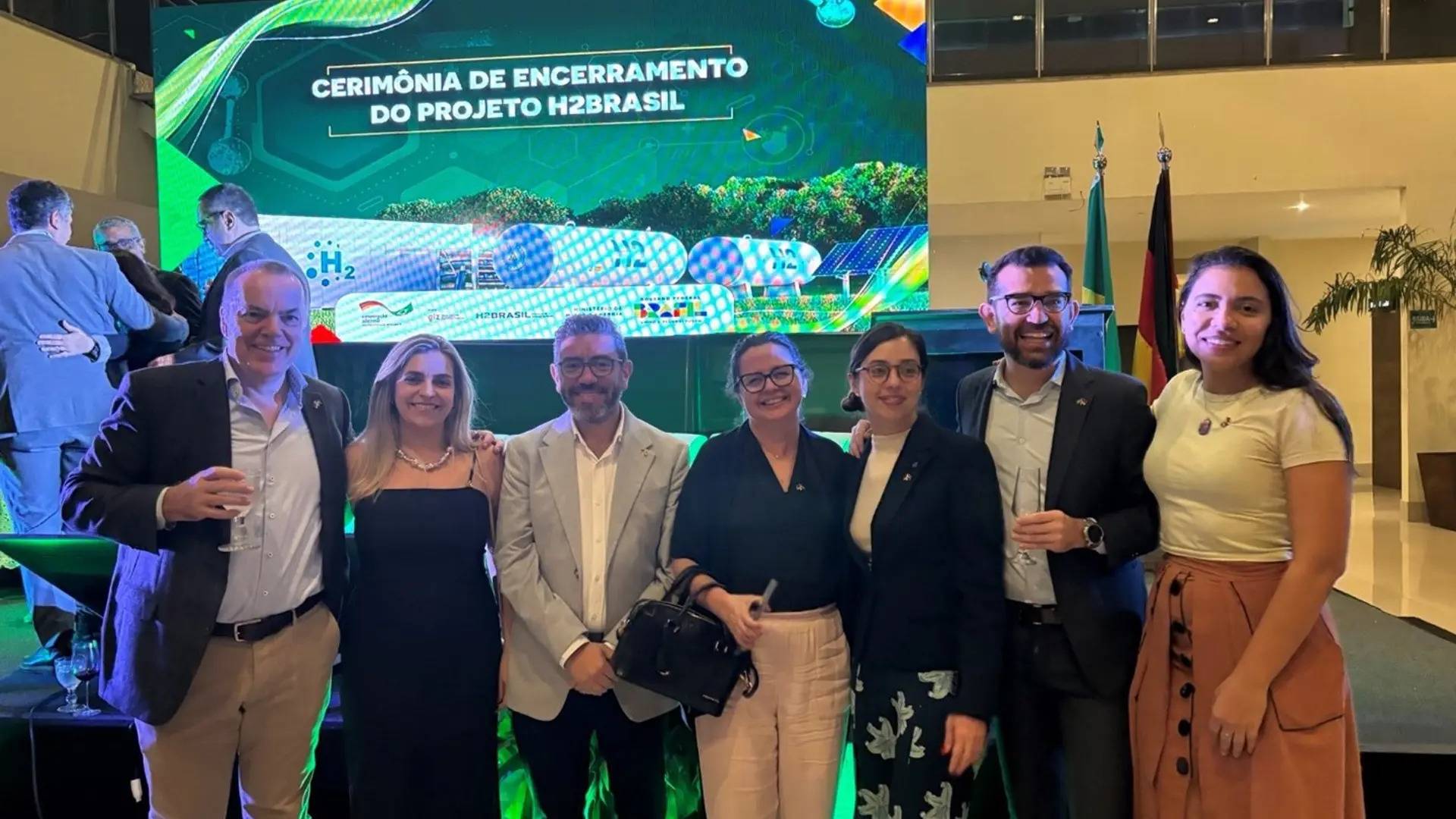

The project equipped the Ministry of Mines and Energy (MME) the inputs to design a comprehensive H2 Programme, setting international benchmarks and developing energy planning scenarios. It explored Brazil's green hydrogen potential and mapped out scenarios up to 2050, ensuring the country is well-prepared for a hydrogen-powered future. Regulatory and legislative inputs were another major focus. The project provided a roadmap and strategy for green hydrogen, including an international legislative benchmark and a detailed catalogue of measures. The team assessed existing regulations to pave the way for future legislative processes. The project also delved into PtX pathways and funding mechanisms, studying the profitability of hydrogen applications and exports.
Sustainable Finance for H2 and PtX
NIRAS developed a market rump-up mechanism for the national development bank in Brazil (BNDES), analysing the current instruments available. This involves the establishment of an entity to coordinate financing efforts (structuring of blended finance)", a guarantee fund and also responsible for establishing criteria for selecting projects eligible for special conditions in order to mitigate the risks of early entrants and boost the densification of the low carbon hydrogen value chain in Brazil. In addition, financial modelling and assessment for 5 real green H2 applications projects were assessed.
H2UPPP: Financial Close and Technical Advisory for Me-Le GmbH
Under the H2Brasil contract, NIRAS was awarded by H2UPPP to manage a team of experts from Brazil, Denmark, Chile, and Belgium. Their tasks include Financial Modelling, Financial Close, and FEL1 engineering evaluations for producing green fuels (methanol, SAF, Syncrude) and green hydrogen in a Power-to-X facility owned by Me-Le GmbH in Paraná, Brazil.
NIRAS has provided comprehensive consulting on hydrogen production, chemical synthesis technology, plant design, economic feasibility, financial modelling, and international financial advice to prepare documentation for financial close, as requested by international donors and investors. In January 2025, the project secured financing for the first stage from BNDES/FINEP in Brazil. Additional advisory services included certification of e-fuels, animal welfare requirements for cooperatives producing biogas, legal, regulatory, and environmental licensing for the PtX project.
The technical and economic feasibility of producing green fuels in western Paraná addresses sanitation issues and manages significant amounts of animal and agricultural waste.
Achievements
- 27 institutions and organisations supported
- 29 knowledge products developed and disseminated (incl. 2 environmental & social studies on H2 and a comprehensive guide to H2 project funding)
- 42 events organised (incl 5 webinars on a potential H2 certification system)
- Feasibility study for a green H2 plan in Parana (technical design, environmental, financial, legal and certification assessments/evaluations
- Conceptual financing mechanism to support introduction of green H2

NIRAS conducted a study for the Eastern Cape province that made 10 recommendations relating to opportunities in the green hydrogen economy and provides inputs into the development of its anticipated provincial hydrogen strategy. The project team was also responsible for arranging inception and validation workshops with the province for stakeholder engagement, gathering information of existing policies and research studies, conducting a gap analysis and a benchmark of international best-practices, and ensuring communication and coordination with GIZ and other relevant actors.
The activities involved:
- Arranging inception and validation workshops with the provinces,
- Gathering information of existing policies and research studies,
- Conducting a gap analysis and a benchmark of international best-practices, and
- Formulating recommendations for potential opportunities and risks.
Achievements
- 6 Eastern Cape institutions supported
- 3 onboarding workshops held in Eastern Cape and Limpopo

