Fisheries & Aquaculture Value Chains

Advancing sustainable aquaculture and blue economy development
Aquaculture—the farming of aquatic species such as fish, shellfish, and aquatic plants, alongside the management of inland and coastal fisheries—is a major driver of global growth in fish production. It plays an important role in integrated agricultural development by improving food security, creating employment, and supporting rural livelihoods.
Integrating aquaculture into traditional farming systems—such as combining fish farming with rice cultivation—allows farmers to use resources more efficiently, increase overall productivity, and diversify income streams. These systems can also reduce pesticide use in rice production. In rain-fed rural areas, natural landscape depressions can be used for early-season fish seed production and later for wild fish harvesting and storage, providing farmers with additional income during periods when fishing is otherwise limited.
From a policy perspective, promoting aquaculture within rural economies offers significant opportunities. Over 75% of global aquaculture production originates from low- and middle-income countries, primarily in Asia. Participatory management approaches that engage local communities help ensure sustainable operations, with women’s groups often playing a leading role in successful aquaculture initiatives.In coastal areas, NIRAS promotes sustainable practices such as mangrove restoration and pond–dyke cropping systems. These approaches protect vital ecosystems—including mangroves, seagrass beds, and coral reefs—while improving resource efficiency and environmental sustainability.
Our specialist services:
- Reforming and harmonising legal and regulatory frameworks, and providing support to budget support actions,
- Needs assessments for and capacity development to blue economy mandated governmental ministries, directorates, and agencies,
- Capacity development of aquaculturalists and training of trainers, e.g., extension agents,
- Production technologies for inland commercial species,
- Implementation of good environmental practices in private aquaculture farms,
- Addressing socio-economics aspects of aquaculture sector,
- Aligning to client blue economy policies and initiatives (e.g., the EU Team Europe supported Blue Economy for Job Creation and Climate Change Adaptation initiative).
For more information on NIRAS’ blue economy capabilities and example projects refer to:
Highlighted projects
Realise the opportunities of fish farming
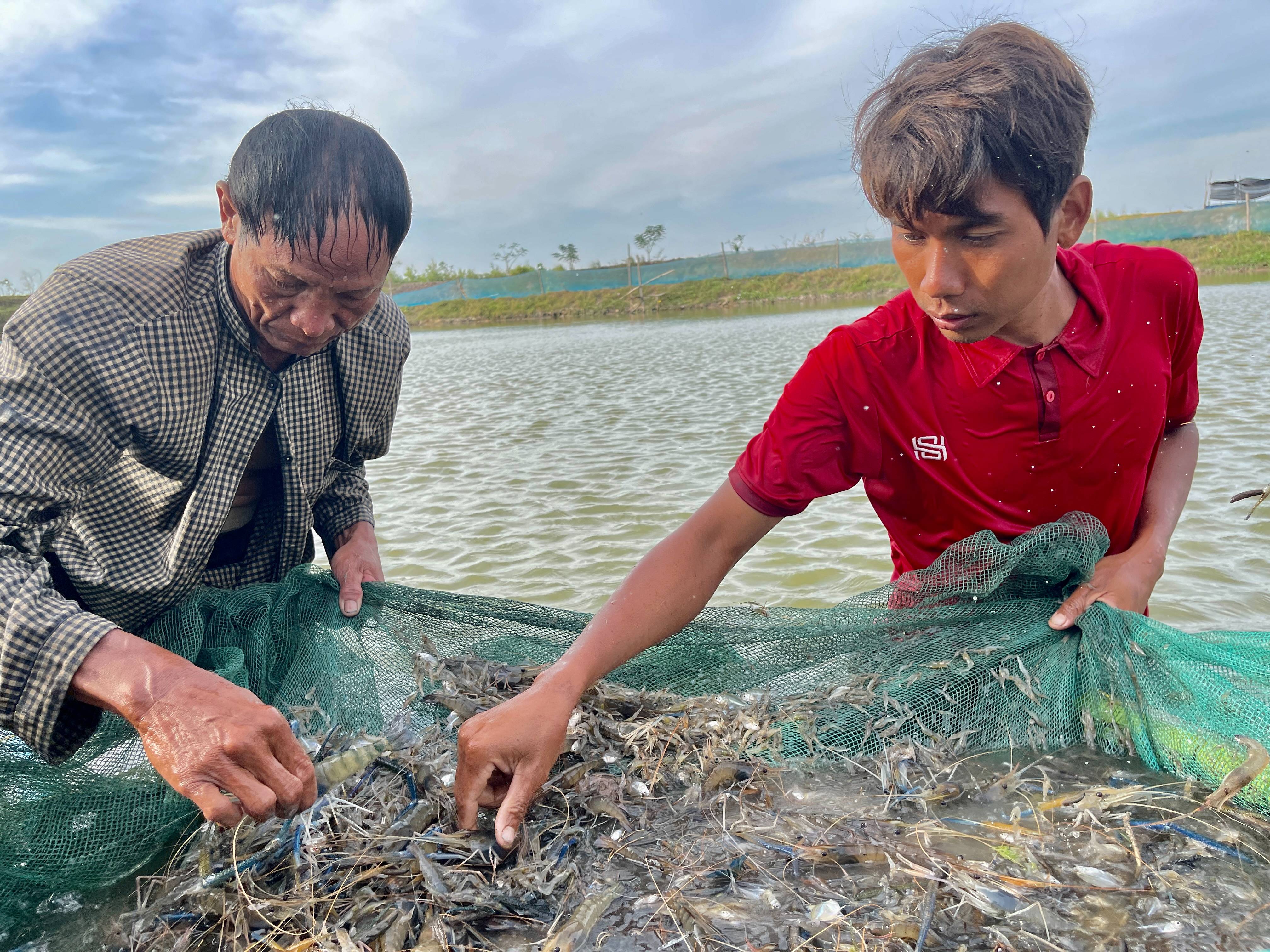
CapFish Aquaculture is part of the Capacity Building and Innovation System programme implemented by the Ministry of Agriculture, Forestry and Fisheries (MAFF) in Cambodia and funded by AFD. Through this initiative, NIRAS supports the development and scaling of sustainable aquaculture systems while promoting efficient and responsible practices across the commercial sector. The programme enables MAFF and its partners to address key challenges in the aquaculture sector—including environmental, technical, economic, commercial, financial, and organisational constraints—while strengthening the knowledge and skills of both public and private sector actors.
The initiative aims to:
- Scale up successful aquaculture systems to support inclusive growth, diversify rural incomes, and improve food and nutrition security at household level; and
- Promote sustainable production practices for high-value species destined for export, including reducing reliance on “trash fish” and wild-caught juveniles, improving disease management, and minimising water pollution to enable access to international markets.
NIRAS has delivered extensive capacity building and training for master trainers, local trainers, and government counterparts at both central and provincial levels. Training topics include aquaculture production systems, fish health and welfare, regulatory frameworks, water quality management, environmental impacts, and aquaculture business development.
Over 6,000 farmers have been visited, with local trainers providing specific training to more than 2,000 farmers in 10 provinces on good aquaculture practices (GAP), following good standard and practices, with linkage to food processing and market demand.


Supporting aquaculture SMEs and smallholder supply chains
Under the Commercial Agriculture for Smallholders and Agribusiness (CASA) Programme, NIRAS partnered with 15 SMEs in Malawi (11), Rwanda (3), and Nepal (1) to pilot innovative business models linking aquaculture enterprises with smallholder farmer supply chains.
Through tailored technical assistance, NIRAS supported both companies and farmers to strengthen business performance, improve productivity, and attract investment. Interventions targeted multiple stages of the value chain—from inputs and production to market access.
Within the feed value chain, CASA supported the development of locally produced alternative feeds, such as black soldier fly-based feed in Rwanda, as well as the growth of commercial-scale fish feed supply in Nepal. These efforts included raising farmer awareness of the benefits of using high-quality commercial feed to improve fish productivity and profitability.
At the production stage, CASA helped aquaculture SMEs strengthen climate resilience and scale operations. For example, the programme piloted and expanded an outgrower model for an aquaculture enterprise in Malawi, enabling the company to meet growing market demand while integrating smallholder farmers into its supply chain.
CASA also supported the commercialisation of smallholder production, training more than 1,000 farmers in Rwanda on improved aquaculture practices. In addition, SMEs received support to strengthen their routes to market, including marketing and promotion as well as logistics solutions such as cold-chain transport to preserve product quality.